

privacy
Where documents actually leak
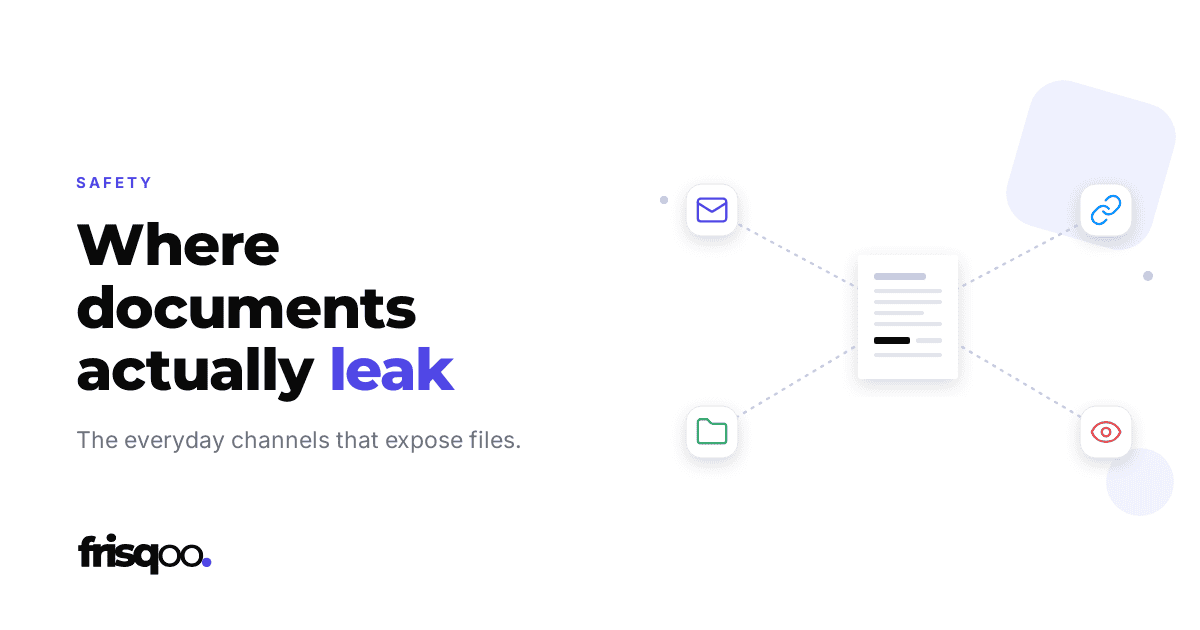
When people picture a document leaking, they think of a break in, someone forcing their way into a server. That happens, but it is rare, and it is not where most files actually slip out. The common leaks are quieter and much closer to home. If you are weighing up whether to trust an online tool with a file at all, that wider question is in are online PDF tools safe.
When a file gets forwarded
The most ordinary leak is a forward. You send a file to one person, they send it to another, and a copy you no longer track ends up somewhere you never chose. Email makes this effortless, and there is no undo. Once a file leaves, every copy has its own life.
Links that never expire
The convenient thing about a share link is that anyone who has it can open the file, and that is also the risk. These links often keep working for months, long after the reason for sending them has passed, and one forward or a paste into a group chat is enough to put the file in front of people you never had in mind. If the tool gives you the option, set the link to expire, or restrict it to named people instead of anyone who holds the link.
Folders open to more people than you think
Cloud folders drift. A folder shared with a small team quietly grows, people come and go, and access is rarely tidied up afterwards. A file you drop in today may be visible to more people than were ever meant to see it. Every so often it is worth checking who can actually reach a shared folder.
The details inside the file
Some leaks are not about where the file goes at all, but what it carries. Author names, dates, comments, and old drafts travel inside the file itself, as we covered in what your PDF says about you. Clearing those before sharing closes a leak most people never notice.
Making fewer copies
The surest way to reduce leaks is to make fewer copies in the first place. Share with named people instead of open links, remove what a reader does not need, and for anything sensitive use a tool that keeps the file on your own device, so there is no server copy waiting to be exposed.
Frequently asked questions
How do most documents leak?
Rarely through hacking. Far more often through everyday habits: a forwarded email, a share link that stays live, a cloud folder open to more people than you think, or hidden details left inside the file.
Are shared links a privacy risk?
They can be. A link that anyone can open often keeps working long after you have forgotten it, and it can be forwarded to people you never meant to reach. Set an expiry or restrict access where you can.
What is the simplest way to reduce leaks?
Send less. Remove hidden details, share with named people instead of open links, and for sensitive files use a tool that keeps the file on your own device so there is no extra copy to leak.